
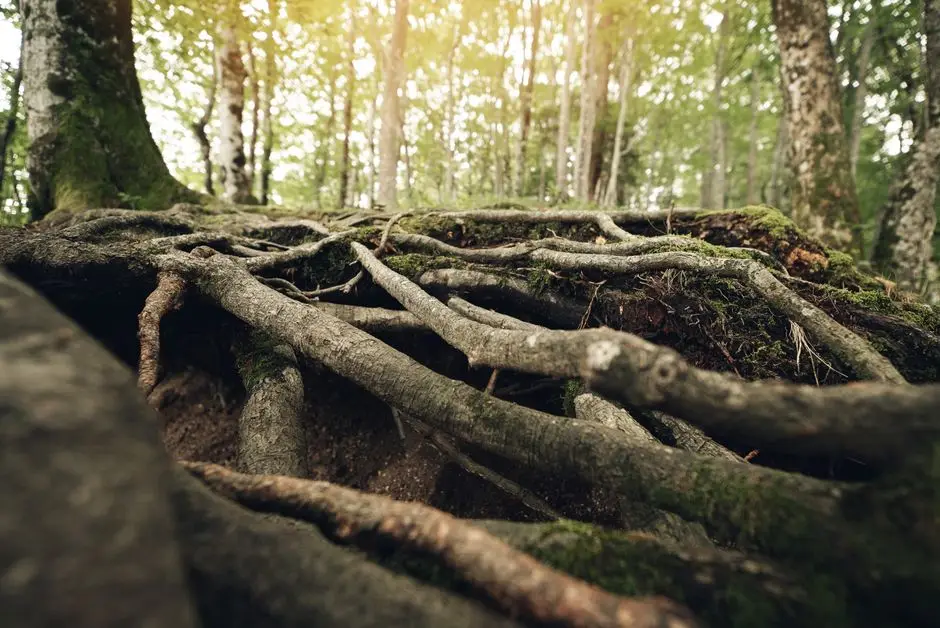
Tree roots in sewer lines in Littleton CO show up as slow drains, gurgling toilets, and sewage smells in the basement long before you see a backup. The roots themselves are not the problem - the moisture and nutrients escaping through a hairline crack or a loose joint are what pull them in, and once inside they grow into a mat that catches everything you send down the pipe.
We have cleared root-blocked laterals from Ken Caryl to Roxborough, and the pattern is almost always the same: a homeowner notices one slow drain, ignores it for a month, then wakes up to two inches of water in the laundry room. This post covers the warning signs, why Littleton's soil and tree canopy make root intrusion so common here, what removal actually involves, and what it costs in 2026.
What tree roots in sewer lines actually look like
Tree roots in sewer lines are thin, white, hair-like tendrils that enter through joint gaps and cracks, then thicken into rope-like masses that block flow. The first roots through a joint are no thicker than sewing thread. They feed on the warm water, soap, and organic waste passing by, and within a single growing season they can swell to the diameter of a pencil.
By the time you notice a backup, the mass inside the pipe is usually a tangle of fine roots plus a cap of grease, paper, and hair that has snagged on them. That combination is why snaking alone rarely solves the problem for good - you punch a hole through the blockage, but the root structure stays attached to the pipe wall and regrows.
Clay tile laterals are the worst offenders. Most Littleton homes built before 1980 have them, and clay tile is laid in 3-foot sections with mortar joints every few feet. Each joint is a potential entry point. Older cast iron is a close second because decades of waste have corroded the bottom of the pipe, and roots find those pits fast.
The warning signs Littleton homeowners miss
Tree roots in sewer lines warning signs in Littleton Colorado almost never start with a flood. They start small, and they start in the fixtures lowest in the house.
- One drain slows down while others stay fine. A single slow shower or tub drain usually means a local clog. Multiple slow drains on the same floor point to the main line.
- Toilets gurgle when you run the washer or shower. That gurgle is air being pulled through a partially blocked line. It is one of the earliest and most reliable signs of root intrusion.
- Water backs up in the lowest fixture first. In most Littleton homes that is a basement floor drain or a laundry sink. If that drain burps when you flush upstairs, the blockage is already significant.
- Sewage smell in the basement or crawlspace. Roots create a partial dam, and the standing waste behind it off-gasses through floor drains and cleanouts.
- Dark, damp patches in the yard along the sewer run. If the grass grows faster and greener in a straight line between your house and the city main, that line is leaking - and roots are already there.
- Fruit flies or drain flies that keep coming back. They breed in the slime coating roots create inside the pipe.
If you are seeing two or more of these at once, stop running water and get the line looked at. A camera inspection takes about 30 minutes and tells you exactly what is in the pipe instead of guessing.
How do tree roots get into sewer lines in Littleton Colorado?
Roots get into sewer lines through existing defects - they do not break into a sound pipe. A hairline crack, a separated joint, or a corroded spot is all it takes. Root tips detect moisture gradients in the soil and grow toward the source, then squeeze through openings narrower than a human hair.
Littleton makes this worse than most Front Range cities for three reasons:
- Soil. The clay-heavy ground along the South Platte corridor holds water and shrinks in dry spells. That shrink-swell cycle shifts pipes and opens joints over time.
- Tree canopy. Mature cottonwoods, silver maples, willows, and blue spruces are everywhere in the older parts of town. Willow and cottonwood roots travel 30 to 50 feet looking for water.
- Age of housing stock. A large share of homes in the 80120 and 80123 ZIP codes were built between 1950 and 1980, which puts their laterals squarely in the clay tile era.
Roots do not need a broken pipe to cause a problem. A joint that has shifted an eighth of an inch is enough. That is why we see root intrusion in houses where nothing has ever backed up before - the pipe was fine, the joint moved, and a root found it.
Which Littleton neighborhoods see the worst root intrusion
Root problems cluster in the older, heavily treed neighborhoods. We run into them constantly in Drain Cleaning Littleton CO in Historic Downtown Littleton, where the housing stock dates to the 1920s through the 1950s and the street trees have had a century to spread. The same pattern shows up in Drain Cleaning Littleton CO in Ken Caryl, where larger lots mean longer lateral runs and more opportunities for roots to find a joint.
Out toward the foothills, Drain Cleaning Littleton CO in Roxborough keeps us busy with root calls because the native scrub oak and juniper root systems are aggressive and the soil is shallow and rocky. Roots there tend to follow the trench line the builder dug, because backfill soil is looser and holds moisture better than the surrounding ground.
Newer builds are not immune. We have pulled roots from 1990s and 2000s laterals in Drain Cleaning Littleton CO in Littleton Village where a single landscape tree was planted too close to the sewer run. One tree, one bad joint, one expensive spring.
Can tree roots be removed without digging in Littleton CO?
Yes - in most cases we clear roots without digging up your yard. We start with a video camera drain inspection Littleton CO to see exactly where the roots are, how far they extend, and whether the pipe is still structurally sound. You cannot fix what you cannot see, and guessing wastes your money.
From there, the method depends on what the camera shows:
- Drain snaking cuts through the root mass and restores flow. It is fast and effective for light to moderate growth, but the roots attached to the pipe wall survive and regrow.
- Hydro jetting uses water at 3,000 to 4,000 PSI to scour the pipe wall clean, stripping roots, grease, and scale back to bare pipe. It clears more of the root structure than a snake and buys you more time between services.
- Mechanical root removal with a chain cutter or root saw is the heavy-duty option for dense mats, especially in clay tile where roots have had years to thicken.
For the full job, our tree root removal Littleton CO service combines camera inspection, mechanical cutting, and jetting so we leave the pipe as close to clean as it can be. If the camera shows a collapsed section, offset joint, or root damage severe enough that the pipe will not hold, we tell you straight - that is a repair or replacement conversation, not a cleaning one.
What root removal costs in Littleton in 2026
Typical 2026 pricing in the Littleton area runs $250 to $500 for a standard root clearing on an accessible main line, and $500 to $900 when the job requires hydro jetting or heavy mechanical cutting. Camera inspection is usually $150 to $350 on its own, and often discounted or bundled when you book the cleaning at the same time.
Emergency calls after hours run higher - expect $400 to $800 for a root blockage cleared at 2 a.m. on a weekend. If the camera reveals a collapsed or badly offset pipe, spot repair runs $1,500 to $4,000, and a full lateral replacement can hit $6,000 to $15,000 depending on length, depth, and whether the driveway or landscaping has to come out.
Those numbers are why we push the camera inspection first. A $250 cleaning that solves the problem is a very different outcome from a $9,000 replacement, and the only way to know which one you are facing is to look inside the pipe.
Common mistakes we see on root jobs
The single most expensive mistake is treating a root blockage like a normal clog. Store-bought drain cleaner does nothing to roots - it eats through the grease cap, restores flow for a week, and leaves the root structure intact and growing.
Other patterns that cost Littleton homeowners money:
- Snaking and stopping there. A snake clears a channel. Without jetting or cutting, roots regrow into that channel within 6 to 18 months.
- Ignoring the second slow drain. One slow drain is a clog. Two slow drains on the same floor is a main line problem, and waiting turns a $300 job into a flooded basement.
- Planting the wrong tree over the lateral. Willows, cottonwoods, silver maples, and poplars should never go within 20 feet of a sewer run. If you are landscaping, choose slow-growing species with non-invasive roots.
- Skipping the camera. Without it, you do not know if you are dealing with roots, a bellied pipe, or a break. The fix is different for each.
- Assuming the city covers it. In Littleton, the homeowner is responsible for the lateral from the house to the property line or tap. The city maintains the main, not your side.
When to call a professional
Call us when two or more fixtures are draining slowly, when a toilet gurgles during a laundry cycle, or when you smell sewage anywhere in the house. Those three signs together mean the main line is already restricted, and every load of laundry pushes you closer to a backup.
If you have had the line snaked once already and the problem came back within a year, that is root regrowth - and it needs cutting and jetting, not another snake. Our team handles main sewer line cleaning Littleton CO with camera verification before and after, so you know the line is actually clear when we leave.
If water is already backing up into the basement or you have multiple inches of standing sewage, that is an emergency Drain Cleaning Littleton CO situation. Stop running water, do not use chemical cleaners, and call. We would rather clear a partial blockage on a Tuesday afternoon than pump out your basement on a Saturday night.
Frequently Asked Questions
What are the warning signs of tree roots in sewer lines in Littleton CO?
Multiple slow drains on the same floor, toilets that gurgle when the washer runs, sewage smell in the basement, and unusually green grass in a line across the yard. Any two of those together usually means root intrusion in the main line.
How do tree roots get into sewer lines in Littleton Colorado?
Roots enter through existing defects - hairline cracks, shifted joints, or corroded spots in clay tile and cast iron. Littleton's clay soil shrinks and swells with the seasons, which opens joints over time and gives roots an entry point.
Can tree roots be removed without digging in Littleton CO?
Yes. Camera inspection locates the roots, then snaking, hydro jetting, or mechanical cutting clears them through existing cleanouts. Digging is only needed when the camera shows a collapsed or badly offset pipe that cleaning cannot fix.
Will tree roots grow back after sewer cleaning in Littleton?
They can, usually within 6 to 18 months if the entry point is not addressed. Hydro jetting and mechanical cutting remove more of the root structure than snaking alone, which extends the interval, but the same joint remains a target until it is repaired.
How much does tree root removal cost in Littleton CO?
Standard root clearing runs $250 to $500 in 2026. Hydro jetting or heavy mechanical cutting pushes it to $500 to $900. After-hours emergency calls run $400 to $800. Camera inspection is $150 to $350, often bundled with the cleaning.
Get help with Drain Cleaning Littleton CO in Littleton
If your drains are slow, your toilets gurgle, or you have already had the line snaked once this year, the roots are still there. We inspect with a camera, clear the line, and show you what we found before we leave.
Call +18312931204 and we will get a technician out to your Littleton home.